Urine samples and Urine diversion
Optimising the workflow with expertise and the highest quality standards
Urine samples and Urine diversion
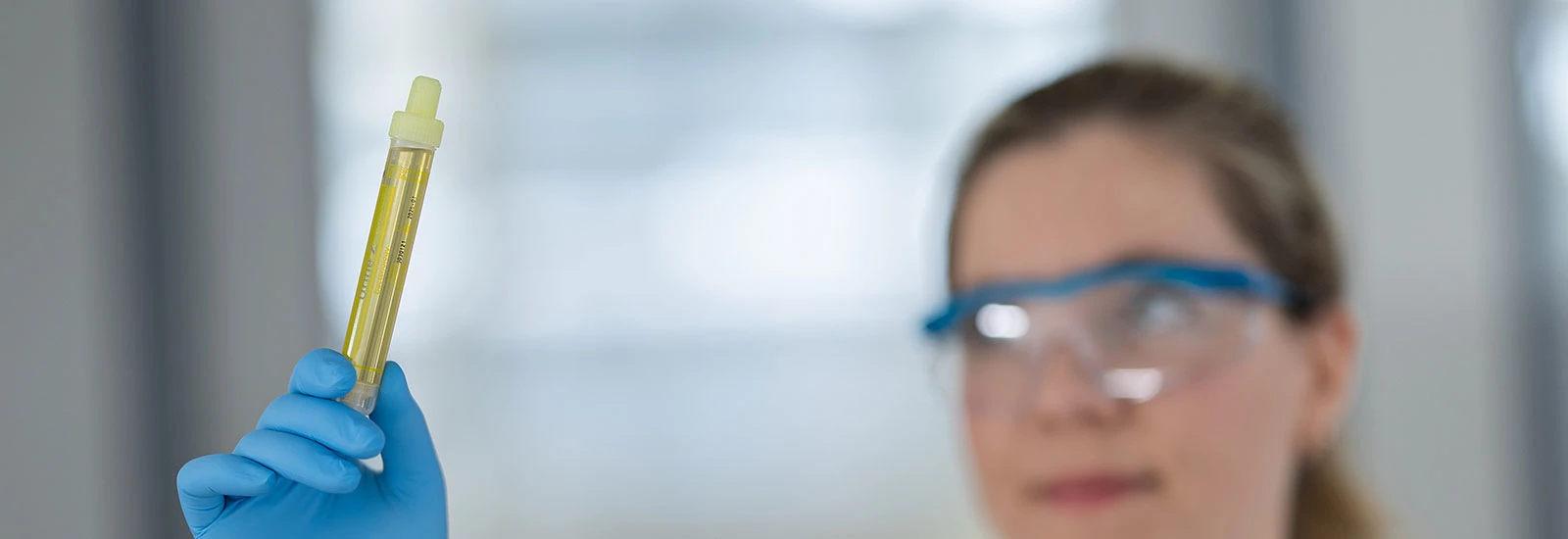
The examination of urine samples is one of the most common laboratory tests. Urine provides information about health in a quick and usually non-invasive way, including early detection of kidney and urinary tract diseases, metabolic disorders such as diabetes or liver disease, as well as physiological changes such as pregnancy. Efficient, and precise urine diagnostics require urine samples of the highest possible quality, as the reliability of the measurement results depends above all on the integrity of the sample material. The right equipment for collection, storage and transport therefore determines the validity of the results obtained later and a possible diagnosis.
With its diverse and innovative solutions, SARSTEDT provides medical professionals and researchers with efficient tools for urine diagnostics - from sample collection to diagnostics. Our priority is always the greatest possible efficiency and convenience in use as well as absolute integrity of the sample material. Discover our range and convince yourself of SARSTEDT's typical quality and precision.
Definition and use of the urine sample
Even in ancient times, the "urine test" was a proven method for the early detection of health concerns and diseases. Urine samples still form the basis of urine diagnostics today and are collected as required for routine medical examinations, acute emergencies or monitoring the progression of illnesses. Thanks to modern technology, urine diagnostics today enables reliable measurement results to be obtained quickly in order to derive treatment-relevant diagnosis.
Overview of different types of urine samples
The type of urine required for a urine sample in each individual case depends on the urine diagnostics to be performed. Depending on the parameters to be analysed, different urine samples may be required. These include
Morning urine (first and second)
Spontaneous urine
Centre stream urine
Catheter urine
Bladder puncture urine
Collected urine (usually 24-hour urine collection)
General information on sample collection
The different types are described in more detail below. In addition, information on correct sample collection and patient information is provided.
Informing patients about correct sample collection before taking samples
Patients should be fully informed prior to sample collection. The following instructions, among others, should be observed for correct sample collection:
In contrast to blood sampling, it is rarely necessary to take a urine sample on an empty stomach. A fasting period is therefore only necessary to a limited extent. Nevertheless, alcohol and caffeine should be avoided and the doctor's instructions followed.
The intake of medication must be noted, as this can influence the measured values.
Urine collection during or shortly after menstruation can cause contamination of the urine with blood and should therefore be avoided.
Thorough cleaning of the hands and genital area before collecting a sample and removingany soap residue is required.
Use of suitable and, in the case of microbiological examinations, sterile urine containers and vessels.
The amount of urine required for a urine sample varies depending on the test method, sample type and analysis method (on average 10 to 100 ml).
Close and hand over collection containers immediately after urine collection.

Common techniques for analysing urine samples
Techniques for collecting and analysing urine samples:
Urine test strips: Chemically coated strips for parameters such as pH value, glucose, proteins, bilirubin or ketone bodies (often used for urinary tract/bladder infections, kidney disease, diabetes or to detect pregnancy hormones)
Urine sediment: Microscopic examination of undissolved urine components after centrifugation of a urine sample (often used to analyse various parameters, in cases of suspected urinary tract infection, inflammation or other diseases)
Urine cultures: platelets with culture medium are immersed in the urine sample and stored sealed as a urine culture (often for the identification and determination of bacteria, fungi or other pathogens)
24 hour urine collection: collection over 24 hours for concentration and quantity determinations of substances, e.g. creatinine in urine (often for creatinine clearance)
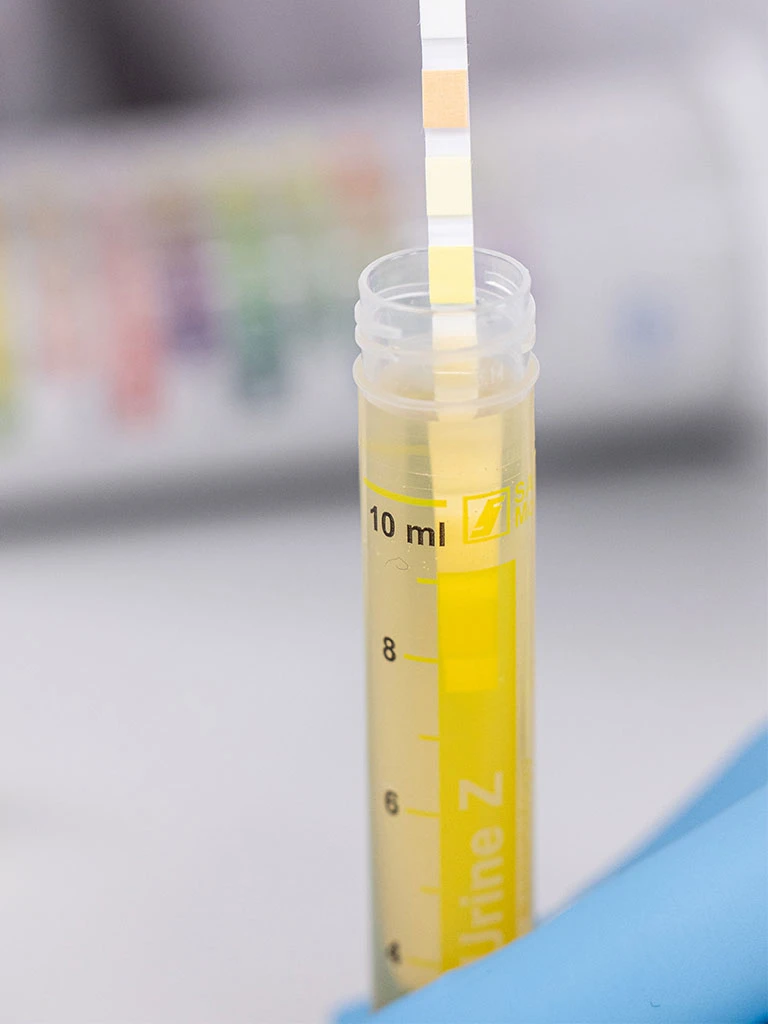
Innovative SARSTEDT solutions for precise urine sample diagnostics
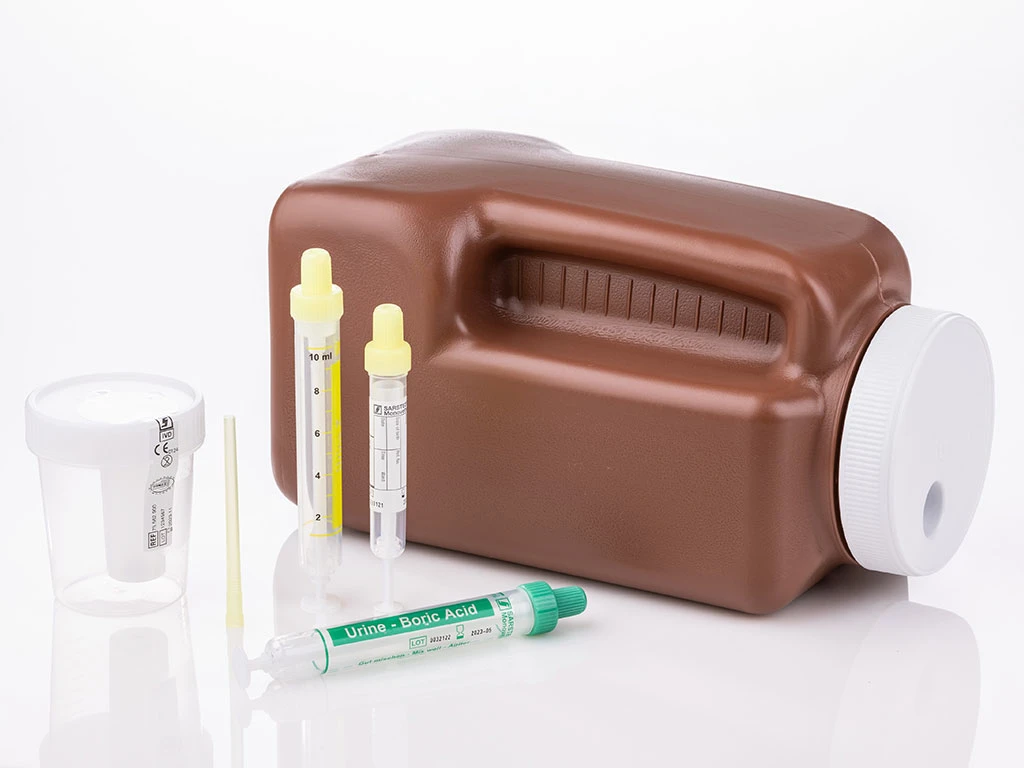
When collecting urine samples, hygiene, efficiency, safe sample collection and optimum sample quality take priority. SARSTEDT offers you innovative solutions such as our Urine Monovette®, sterile urine cups and urine collection bottles.
Innovative solution: NFT urine collection system
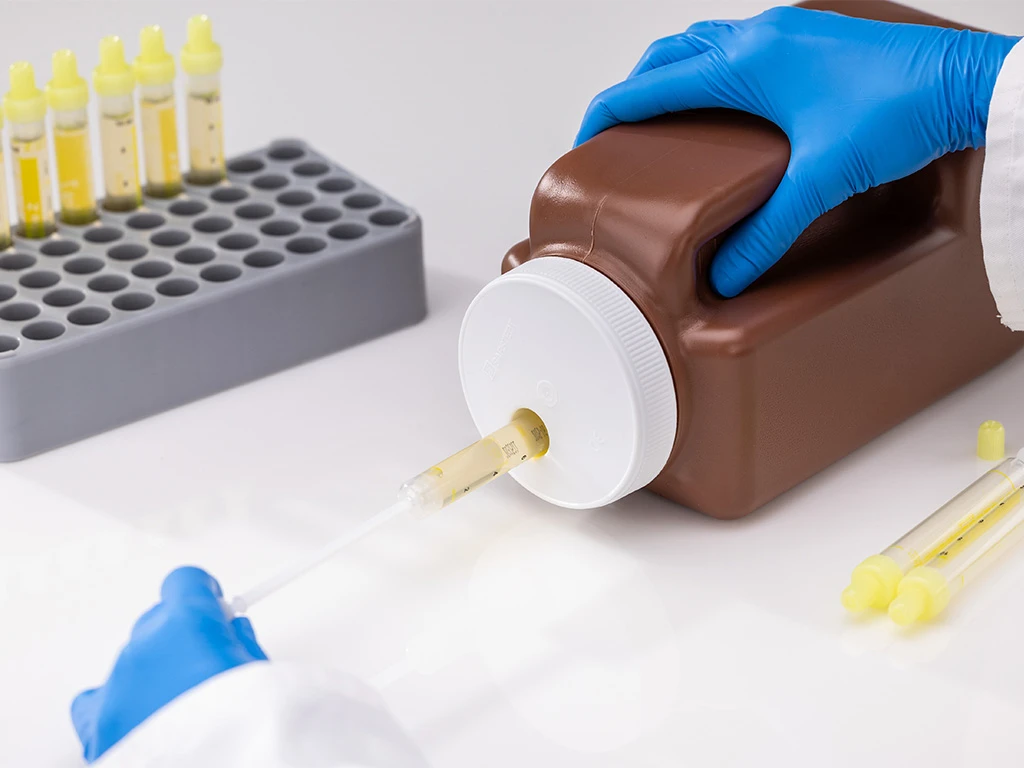
With the NFT products (NFT = Needle Free Transfer), SARSTEDT has now launched its first urine collection system for hygienically closed and needle-free specimen collection. The NFT system sets new standards. This is how Urine Pre-analytics 2.0 works.
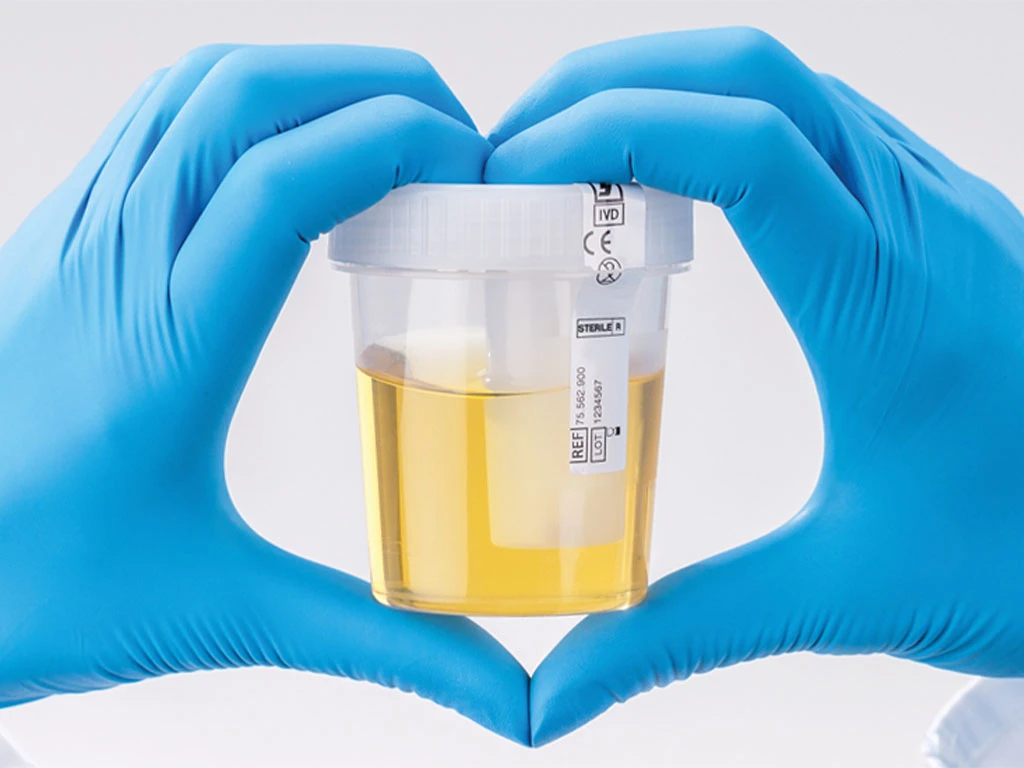
Our products for urine sample diagnostics at a glance
Discover our safe and accurate solutions from collecting to analysing urine samples, including urine sample tubes and sterile urine sample cups. Find out more about which tubes and urine sample cups SARSTEDT:
Let's work together: Discover the 360° solutions for your pre-analytics
SARSTEDT simplifies your work in practice and laboratory with its coordinated products and systems that are consolidated in the pre-analytical workflow product range. Take advantage of the synergies of our systems to simplify all processes before and after the actual laboratory analysis: collection, transport, receipt and distribution of the specimens in the laboratory. As a leading global provider of pre-analytical solutions and systems, SARSTEDT continuously strives to bring greater reliability and efficiency to your work in pre-analytics.