
Capillary blood collection
The right solution for every patient from the most versatile range on the market
Most versatile capillary blood collection system
Capillary blood collection enables diagnostics with small blood volumes. Especially in difficult vein conditions, every drop of blood is valuable in order to obtain a meaningful analysis result. For this reason, capillary blood collection is mainly used for patient groups where only small amounts of blood can be expected. Common areas of application are pediatrics and geriatrics. Due to the less invasive nature of capillary blood collection, it is also used to monitor blood sugar levels, electrolytes, hemoglobin, and medication levels.
With the most versatile capillary blood collection systems on the market, SARSTEDT offers the right solution for each of your patients. Depending on your requirements, you can choose, for example, the Microvette® with nominal volumes between 100 and 500 µl, as well as various collection techniques – end-to-end or with a collection rim. For puncture, choose the right product for gentle sample collection from a colorful bouquet of safety lancets for pediatrics and geriatrics and incision lancets for neonates. Discover our diverse range now and learn everything you need to know about capillary blood collection.
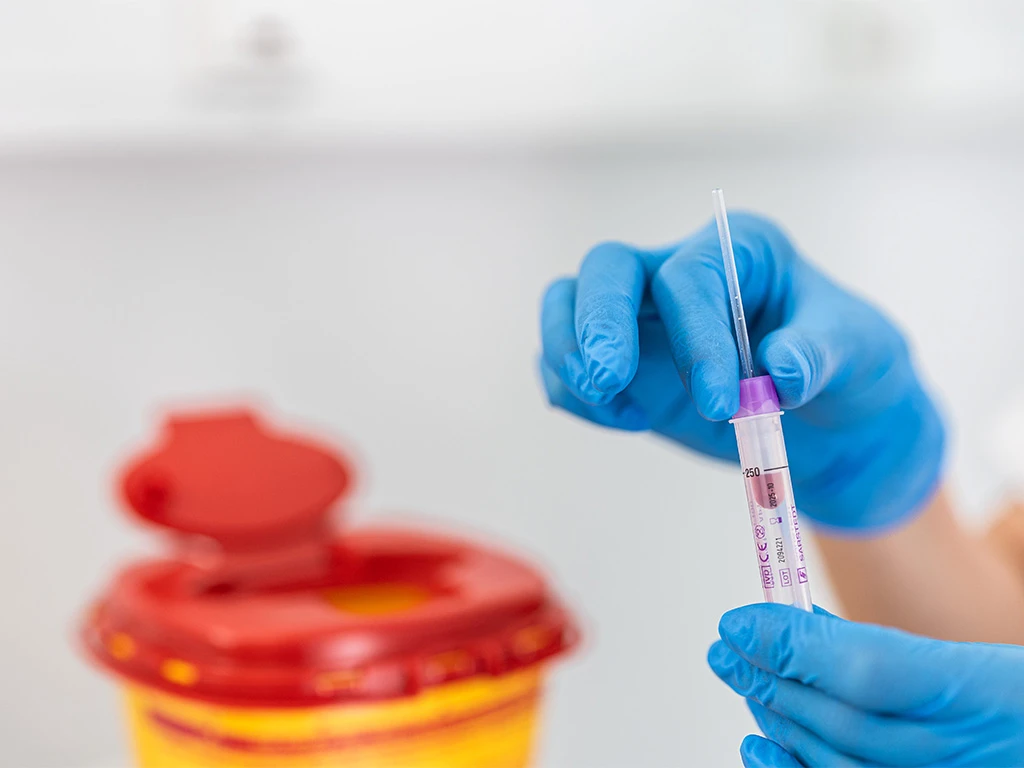
Capillary blood collection: definition and application
Capillary blood collection refers to the collection of blood from the capillaries and is always used when only small volumes of blood are needed or can be collected. But what exactly is capillary blood collection and what are its advantages? In the capillary blood collection procedure, you collect very small blood samples with a volume of less than one milliliter. The sample is taken from the capillary vessels at a well-supplied site, such as the fingertip or earlobe, directly on the skin surface. The minimally invasive puncture makes specimen collection particularly gentle.
Capillary blood collection: preparation, procedure, and follow-up
For professional capillary blood collection, follow these step-by-step instructions:
1. Prepare the basic equipment
Disposable Gloves
Swab
Skin disinfectant
Safety lancets
Sample tubes and sample tubes for capillary blood (microvettes, BGA capillaries, blood glucose test strips, or blood glucose meter)
Disposal box
Plaster bandages or material to promote blood circulation, if necessary
2. Preparation and identification of the patient
Identify the patient to prevent mix-ups and ensure traceability
Explanation and clarification of the procedure and function of blood collection
Selection of the puncture site (usually fingertip, earlobe, or heel)
3. Identification of the sample
Clearly label sample tubes with barcode labels or manual, waterproof labeling
Label the sample type or collection order using color coding on the caps, if possible
4. Preparation of the puncture site
If necessary, warm the puncture site to promote blood flow
Warming options: For newborns and babies, use warm wraps (3 to 5 minutes exposure time); for adults, use hyperemic ointment for earlobes or a warm water bath for capillary blood collection from the finger
5. Preparation for blood collection
Disinfect hands and gloves
Disinfection of the puncture site
Correct hand movement to fix the finger or heel
Prepare/warn the patient before the puncture
Puncture with a safety lancet
Disposal of the safety lancet in a suitable disposal box
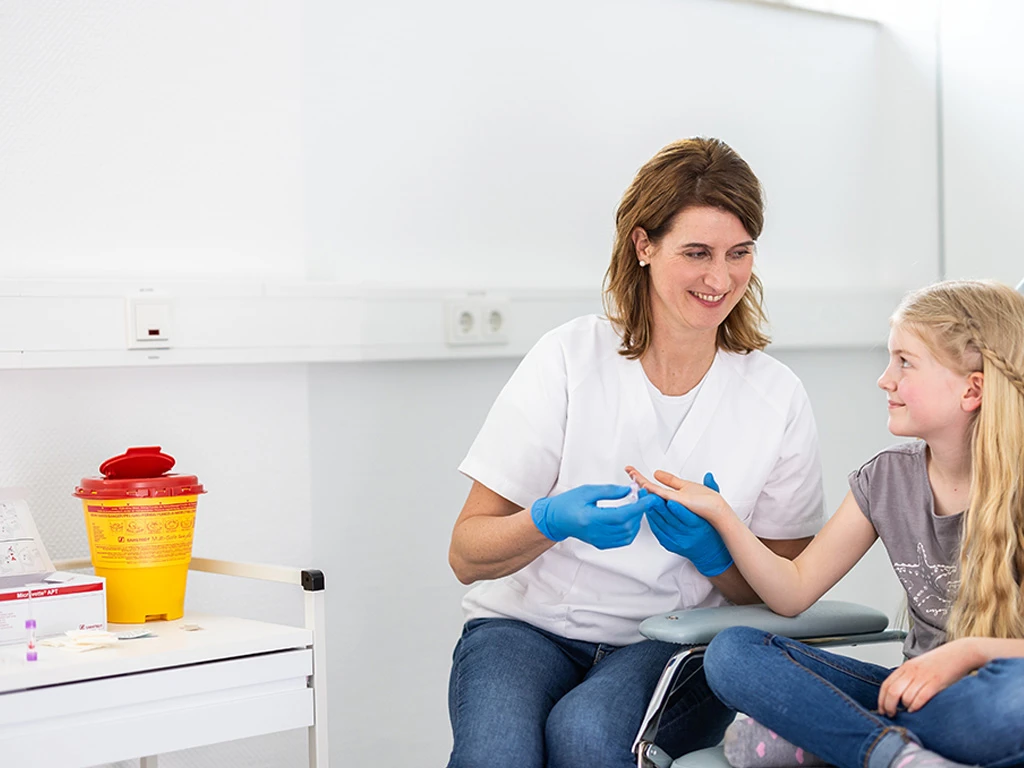
6. Blood collection
Do not apply strong pressure to the puncture site
Discard the first drop of blood
Hold the puncture site downwards and collect the drops that emerge
With end-to-end capillary:
Hold the capillary tube at a slight angle or horizontally, fill it completely with blood, and then hold it vertically so that the blood runs into the collection vessel. Then dispose of the capillary tube, close the sample tube, and mix the sample "upside down.".
With collection rim:
Collect the blood drops with the rim of the collection vessel, close the vessel with the cap, and mix the sample carefully
Additional blood collection techniques can be performed as needed using test strips or a blood glucose meter.
When collecting blood, the following collection order for capillary blood is recommended in accordance with the CLSI standard: EDTA, lithium heparin/lithium heparin gel, fluoride, and serum/serum gel.
7. Post-processing
Clean the puncture site with a swab and apply a bandage if desired
Proper disposal of consumables
Disinfection of your hands.
Label and sort capillary blood samples for sample transport.
More information on the topic of sample transport
Document all steps
Possible sources of error and complications
When collecting capillary blood, sources of error can be minimized in advance to ensure reliable analysis results. Common sources of error include:
Inadequate or no disinfection of the hands or puncture site.
The first drop is collected, which can influence the analysis result.
Failure to follow the sequence specified by the CLSI standard.
Avoid repeated strong pressure during blood collection ("milking" the punctured finger).
Lack of communication and preparation of patients regarding their individual sensitivity to pain and the puncture procedure.
Haemolysis of capillary blood due to 'milking' during specimen collection or due to no/excessive mixing of the blood sample.

Products and materials for capillary blood collection
No compromises in safety, quality, and precision—that's what our SARSTEDT products for capillary blood collection stand for. Thanks to their high-quality materials, innovative design, and ease of use, you can rely on our products. We offer a wide range of solutions that meet the highest requirements for sample collection from different patient groups.
Let's work together: Discover the 360° solutions for your pre-analytics
SARSTEDT simplifies your work in practice and laboratory with its coordinated products and systems that are consolidated in the pre-analytical workflow product range. Take advantage of the synergies of our systems to simplify all processes before and after the actual laboratory analysis: collection, transport, receipt and distribution of the specimens in the laboratory. As a leading global provider of pre-analytical solutions and systems, SARSTEDT continuously strives to bring greater reliability and efficiency to your work in pre-analytics.